
Dear Trinity Church,
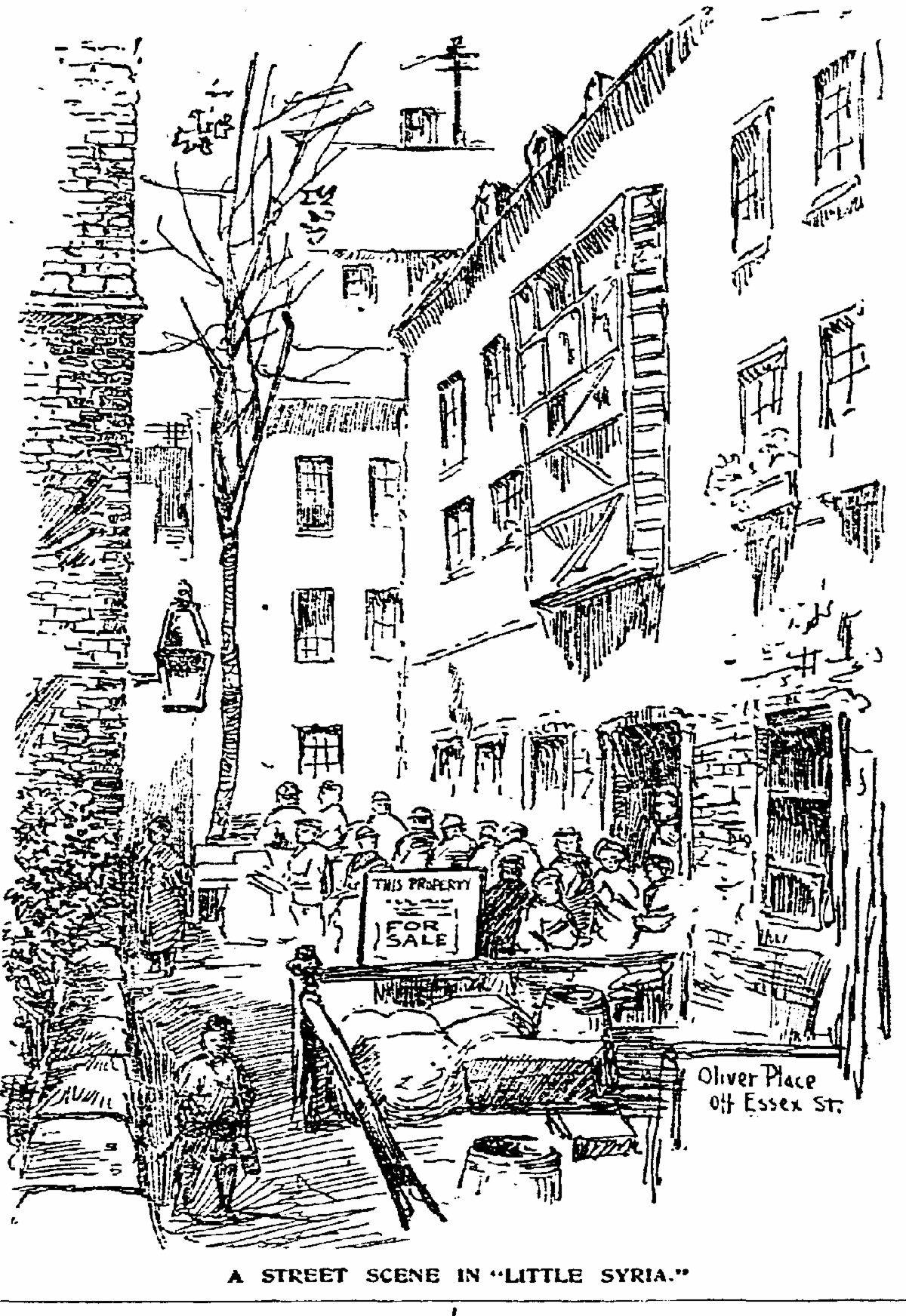 Naif Tamer lived on Hudson Street. He resided there for a period in the late 19th and early 20th centuries. Hudson Street located in Boston’s South Cove (now part of Chinatown) was the heart of “Little Syria” or “Syriantown,” the city’s first Arabic-speaking community. The community thrived from the 1880s to the 1950s when undone by urban renewal. Centered on Hudson, Tyler, and Oak streets, Little Syria was a vibrant community of predominantly Christian immigrants from Greater Syria (that includes modern-day Syria and Lebanon). Early immigrants often labored as peddlers, lace importers, and in local garment factories. When Tamer, born in Damascus, emigrated to the U.S. around 1890, Syria was part of the Ottoman Empire, a powerful Islamic state that held power for 600 years (c. 1299-1922). Tamer imported and sold Turkish rugs among other oriental goods. And, for a while, he chose Trinity Church as his place of worship.
On January 1, 1891, at Trinity Church, twenty-seven-year-old Tamer married nineteen-year-old Janna P. Maloof. Rector Phillips Brooks officiated. Four years later, on May 14, 1895, Trinity Assistant Minister Rev. William H. Dewart baptized their two children, Henry Naif and Josephine. Baptismal sponsors included David A. Fuleihan, Najeem R. Maloof, and Bridget Connor. The baptism did not take place at Trinity, however, but instead at the Massachusetts Infant Asylum. The Asylum had been established in 1868 to care for abandoned, orphaned, or destitute infants. It focused on improving sanitary conditions and providing wet nurses to reduce high mortality rates. It was not uncommon during this time for struggling families, like Tamer’s, to temporarily place their children in such facilities. Tamer would eventually be reunited with his children.
On July 13, 1896, Tamer became a naturalized US citizen. In 1898, after his wife died, he remarried Foumia E. Tradd, who was also of Syrian heritage. Tamer was thirty-three and she was nineteen. Together they would have at least eight children. In May 1901, the Boston Herald featured Tamer in a story entitled, “A Native of Damascus. Naif Tamer, Rug Merchant, Lives on Hudson Street and Prospers. He Belongs to Trinity.”
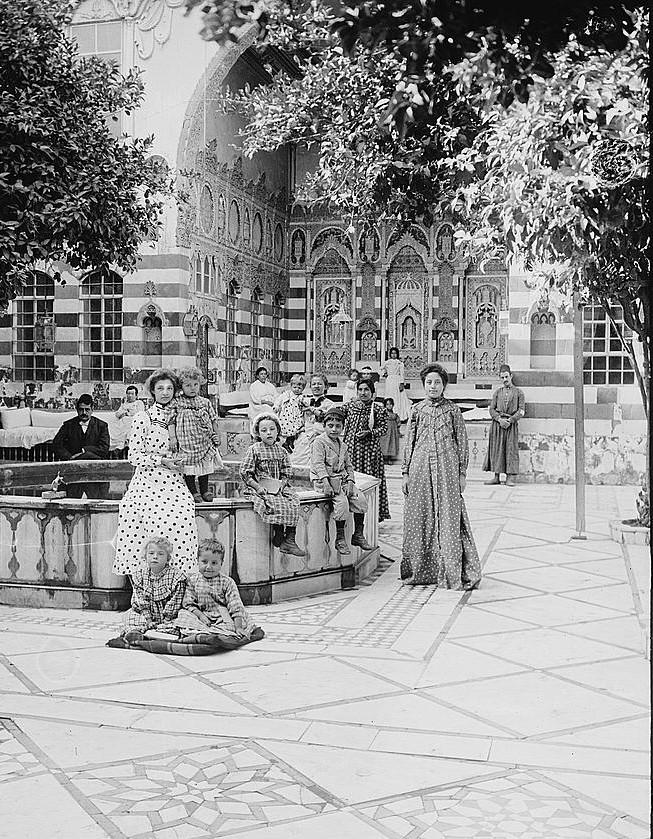 The article notes “that he was born and bred in wealth and comfort in one of those luxurious stone mansions that fill the most ancient of earth’s cities, where the tinkle of fountains in the central courtyard keeps the air cool; where fig trees and olives and grapevines shade the soil, and modern representatives of what was once a powerful, world-conquering empire live, rather uneasily, beneath the dominating crescent of the Ottoman.”
The article goes on to mention that Tamer, “the son of sheiks” had been a member of Trinity Church for twelve years and described him as one of the first Syrians to settle in Boston.
While Tamer made a name for himself as an importer, by the end of 1902 he began auctioning off his stock. In 1903, he embarked upon a new venture called Al Boostan Publishing Company with Elias Maria and Selim S. Sarkis. Sarkis, born in Beirut, was known as the Lafayette of the Syrians. He used his publishing acumen to criticize, and even call for the assassination of, the Turkish Sultan for his persecution of Christians.
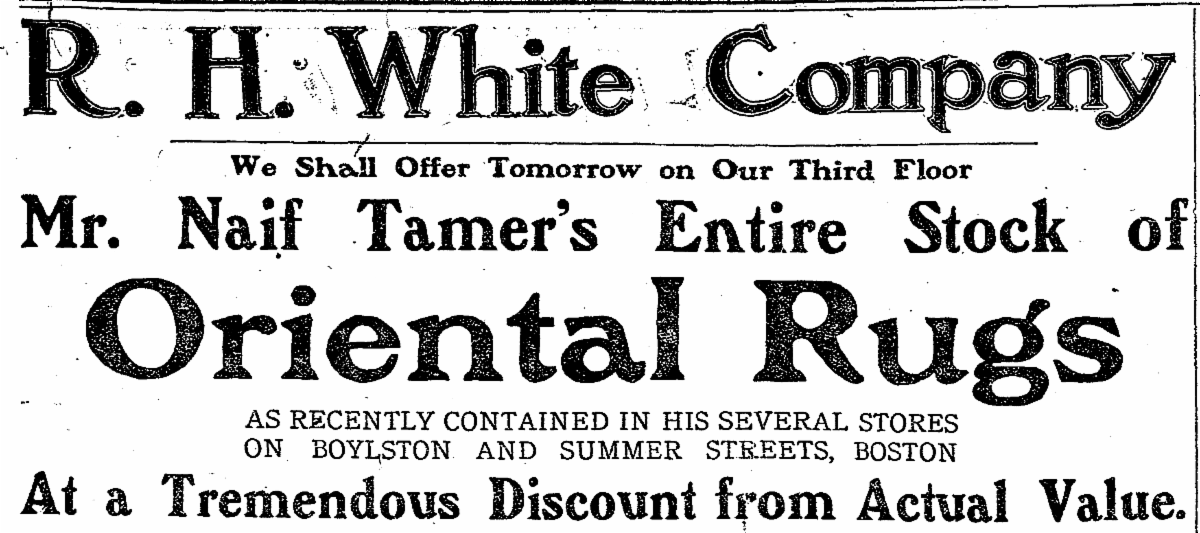 On April 5, 1904, Tamer wrote the auction house R. H. White Company:
Gentlemen,
Wishing to devote more of my time and capital to other branches of my business, I have decided to discontinue the importation and retailing of Oriental Rugs, and consequently will accept your very low cash offer for my entire stock of Rugs, although it barely covers the customs duties on such rugs.
Most of these rugs are superb specimens which have been selected personally by me to suit the discriminating tastes of my exclusive clientele, and their sale by you at the prices you are able to place on them will be doubly welcome.
Yours very truly,
Naif Tamer
Even after auctioning his stock, in 1905, Tamer declared bankruptcy. It would not be the last time. The immigrant life in Boston was hard. In 1900, Tamer’s two-year old daughter Dahd died. In 1907, Tamer’s daughter Louisa also died. By 1912, it was an unsettled world inching toward its first World War, and in that year, Tamer filed for bankruptcy once more.
Tamer’s wife Foumia died in 1918. Despite financial hardship, census and city records throughout the 1910s and 1920s show Tamer as head of household living with many of his children including Josephine until she married around 1929. By the 1930 census Tamer lists his occupation as retired.
Naif Tamer died October 5, 1934. He is buried at Mount Benedict Cemetery in West Roxbury.
Until next month,
Cynthia
Read all of the From the Historians here.
If you’d like to receive news like this from Trinity in your inbox, sign up at trinitychurchboston.org/emails.
Sources and Further Reading
Online
A Little Syria in Boston
https://www.leventhalmap.org/articles/boston-little-syria/
Boston Little Syria Project
https://bostonlittlesyria.org/
Newspapers
Bankruptcy Notices. Boston Evening Transcript. September 18, 1905, p. 13.
Bankruptcy Notices. Boston Evening Transcript. June 1, 1913, p. 15.
A Native of Damascus. Naif Tamer, Rug Merchant, Lives on Hudson Street and Prospers. He Belongs to Trinity. Boston Herald. May 10, 1901, p. 10.
Old Orchard Sensation. Assassination of Sultan Advocated by One of the Speakers at the Big Tabernacle. Boston Herald. September 18, 1899, p. 2.
Other
Trinity Church Baptism and Marriage Archives
Images
Advertisement. The Boston Globe. April 10, 1904, p. 7.
American Colony. Photo Department, photographer. Damascus Esh-Sham. Fountain in Damascus courtyard. [Approximately to 1920] Photograph. Retrieved from the Library of Congress, <www.loc.gov/item/2019692652/>.
Illustration from Hottest Day This Year. Boston Herald. August 11, 1896, p.3.