

 Dear Trinity Church,
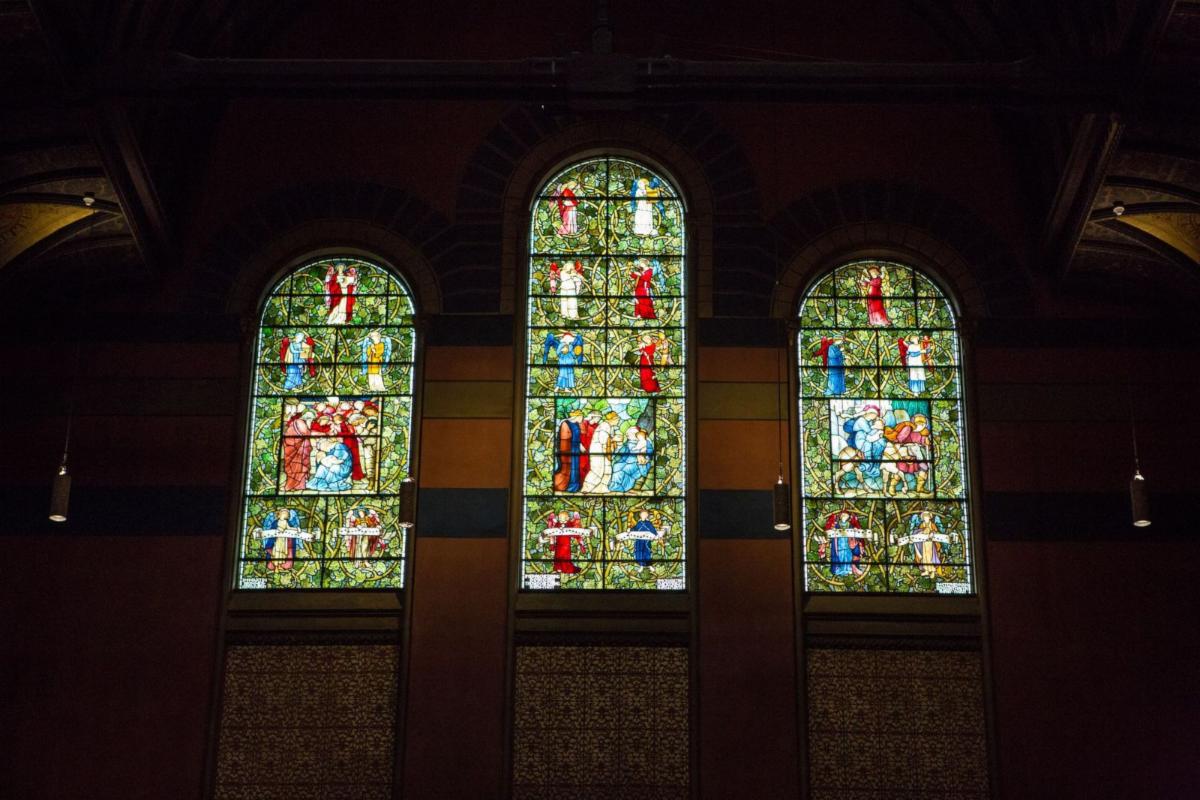
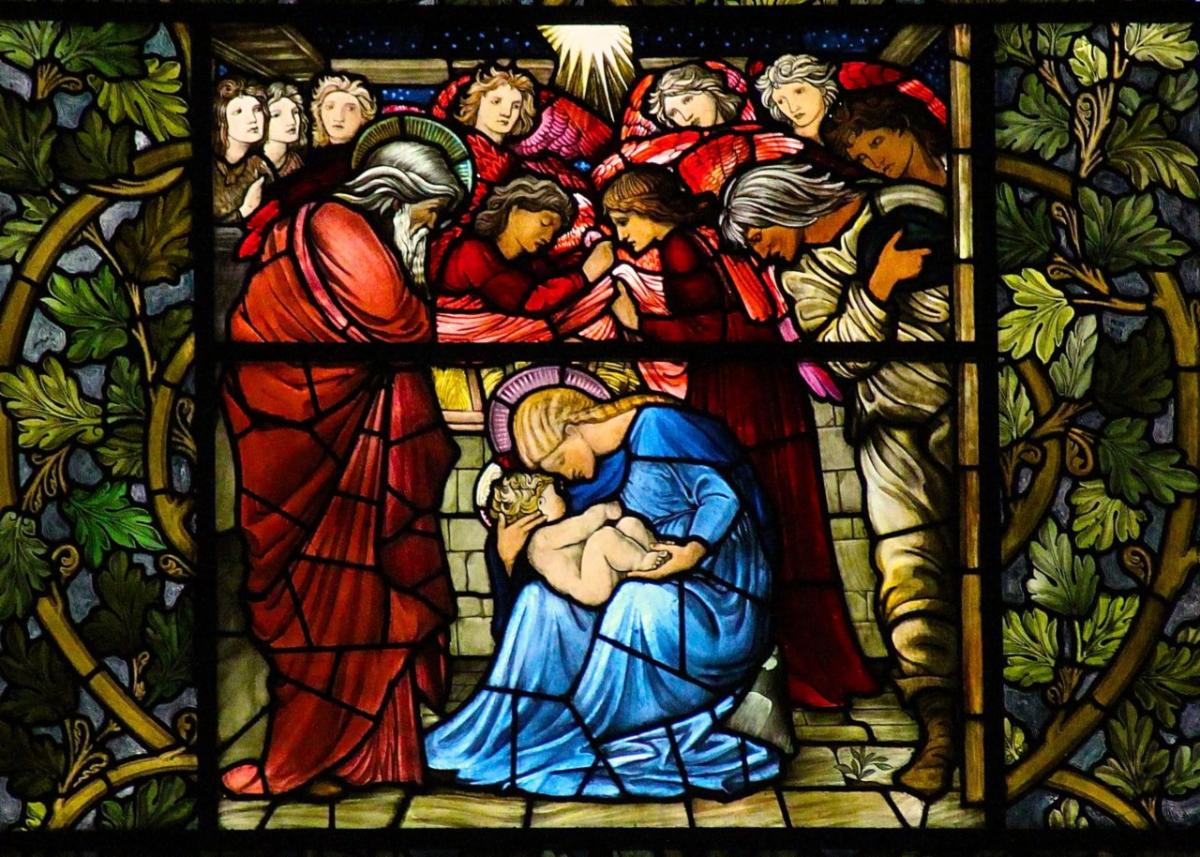
In the north transept of Trinity Church there are three windows collectively referred to as The Christmas Windows. Installed in 1880, all three windows were made by William Morris & Co. of London and designed by Edward Burne-Jones. The center of each window depicts an early New Testament scene. In the window to the far left, the Star of Bethlehem shines down upon an inn. Mary, wearing blue and positioned near the center of the picture, cradles the infant Jesus. Joseph stands close by, while the shepherds—guided to the scene by a host of angels—gather around them. It is The Wonder of the Shepherds. Martin Brimmer commissioned the window in memory of his father of the same name.
 The Brimmer family was long associated with Trinity Church. Martin Brimmer was born on December 9, 1829, the only son of Martin Brimmer, who twice served as Mayor of Boston. The second Trinity Church, where baby Brimmer was baptized, was designed by his uncle George Watson Brimmer. As a sickly child, he received his education at home before entering Harvard at age sixteen in 1846 and graduating three years later in 1849. He studied law but never practiced in part due to the great wealth he inherited from both parents. Throughout his childhood he visited Europe. After his graduation from college, he once more traveled abroad to Europe, nurturing his lifelong appreciation of art and ancient history. Returning to Boston in 1853, at the age of twenty-four, he was elected as a Trustee of the Boston Athenaeum.
With his wealth, Brimmer could have lived a life of complete leisure. Instead, he used his privileges to empower him to help others. As Director of the New England Emigrant Aid Company (NEEAC), he visited Kansas to see firsthand the impact of the company’s efforts. The NEEAC, founded in 1854 by Eli Thayer, was an abolitionist organization aimed at making Kansas a free state by assisting anti-slavery settlers.
Brimmer was interested not only in abolition, but in charities of all sorts. He served as a State Trustee of the Massachusetts General Hospital, a Director of the Farm School, a state reform school for boys, a Trustee of the Perkins School for the Blind, and a Director of the Provident Association, a charity organization aimed at preventing pauperism through volunteer counseling, case histories, and relief. For twenty-five years he was also President of the Boston Co-operative Building Association, improving dwellings for the poor. He was quite generous, and very modest, about his philanthropy.
In 1855, he married Marianne Timmins. In their homes on Marlboro Street in Boston and in Beverly, MA, they hosted artistic, cultural, and political elites in grand gatherings. They had no children. They adopted Marianne’s nieces, Minna and Gemma. Minna would eventually travel to Egypt with Brimmer.
While not especially desiring a political life, in 1859–1861 Brimmer served as a member of the Massachusetts House of Representatives. In 1864 he served in the Senate, and in 1876 he cast his vote as a Presidential Elector for Rutherford B. Hayes. At the age of thirty-seven, in 1867, he was unanimously elected as a Fellow of Harvard College. After he resigned from this position, he was reappointed and served until his death, and during part of that time, he also sat on the Board of Overseers.
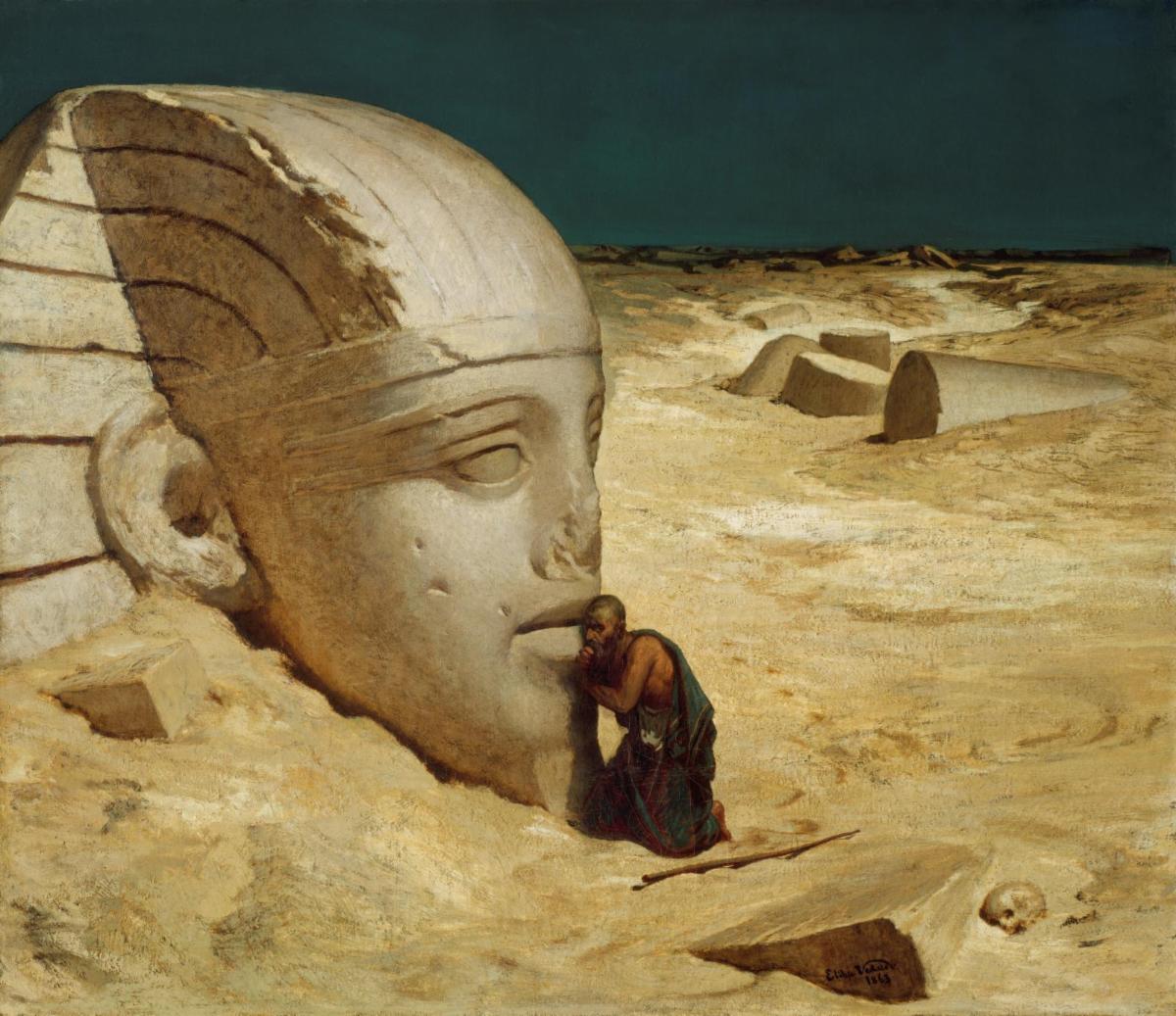
The Questioner of the Sphinx by Elihu Vedder, purchased by Brimmer, 1863.
He was a founding member and longtime supporter of the Archaeological Institute of America. Inspired by his interest in artifacts and ancient peoples he traveled to Egypt, a trip that led him to write a series of essays on the history, religion, and art of ancient Egypt.
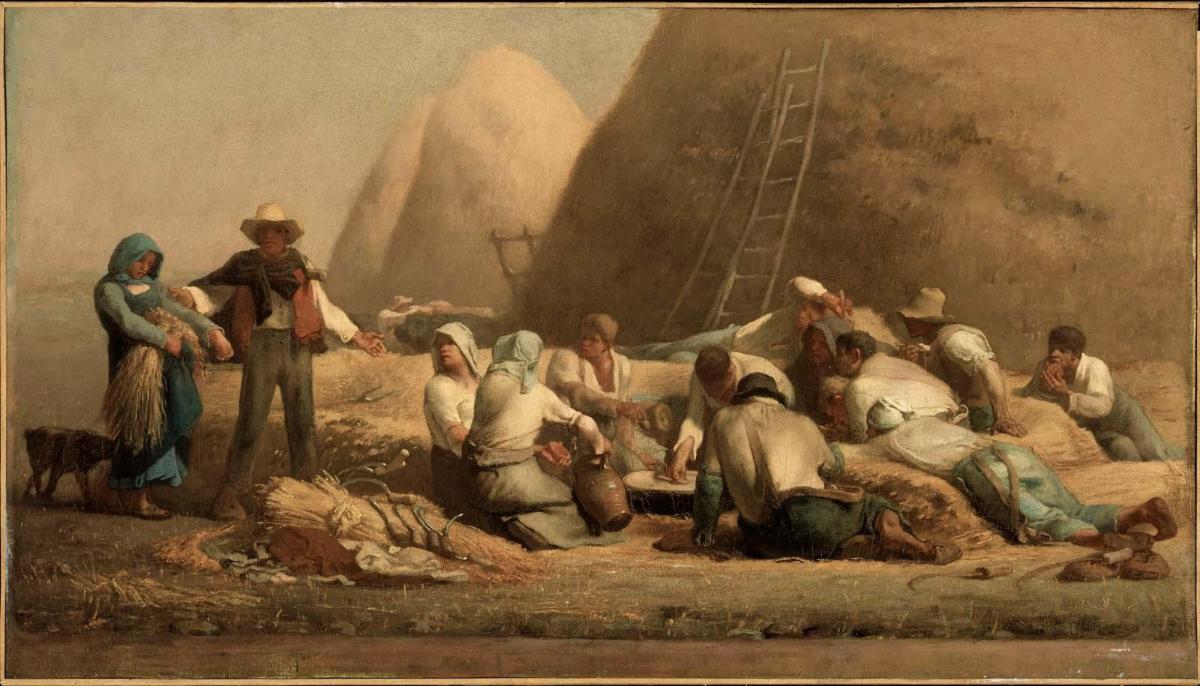
He spoke eloquently on the importance of art in popular education, for all and not just the wealthy, a belief strongly shared by his friend and fellow Trinity parishioner Sarah Wyman Whitman. He wrote to Whitman about art and artists while traveling in Europe and elsewhere. Eighty-six of his letters to her are housed at the Archives of American Art. In them he confided his hopes and dreams for art in New England. He especially enjoyed the work of contemporaries William Morris Hunt, Jean-Francois Millet, and Elihu Vedder. He was not avantgarde. He questioned James Mcneill Whistler’s appeal with his loose brushwork, abstract style and paintings that some critics, like John Ruskin, considered unfinished.
 In 1869 one of his dreams came true: the creation of an art museum for the people of Boston – through his gentle encouragement and behind the scenes guidance. In the end, he became a principal founder of the Boston Museum of Fine Arts and served as its first president until his death. His letters to Whitman show that the museum was never far from his mind. He would often invite Whitman to help with exhibitions.
In 1872, Brimmer served on the Citizens’ Relief Committee following the Great Boston Fire. In that year, before the Great Fire, he joined the Trinity Church Building Committee to oversee construction of a new church in the Back Bay. It would be the third building for the parish. The property was acquired prior to the fire that destroyed the second church.
In the 1880s, he once more traveled extensively in Europe visiting with artists and, as he had done since his earliest visits to the continent, collecting art.
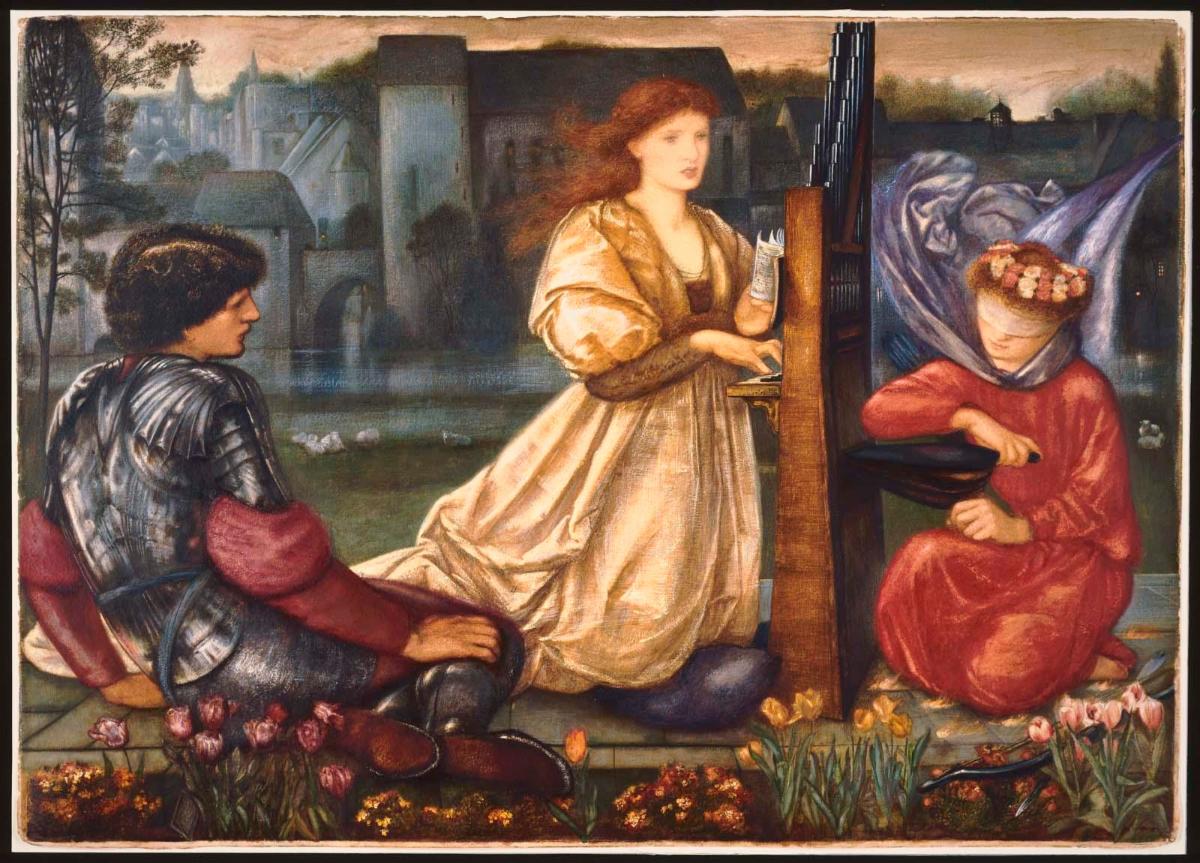
The Love Song (Le Chant d’Amour) by Edward Burne-Jones, purchased by Brimmer, 1887.
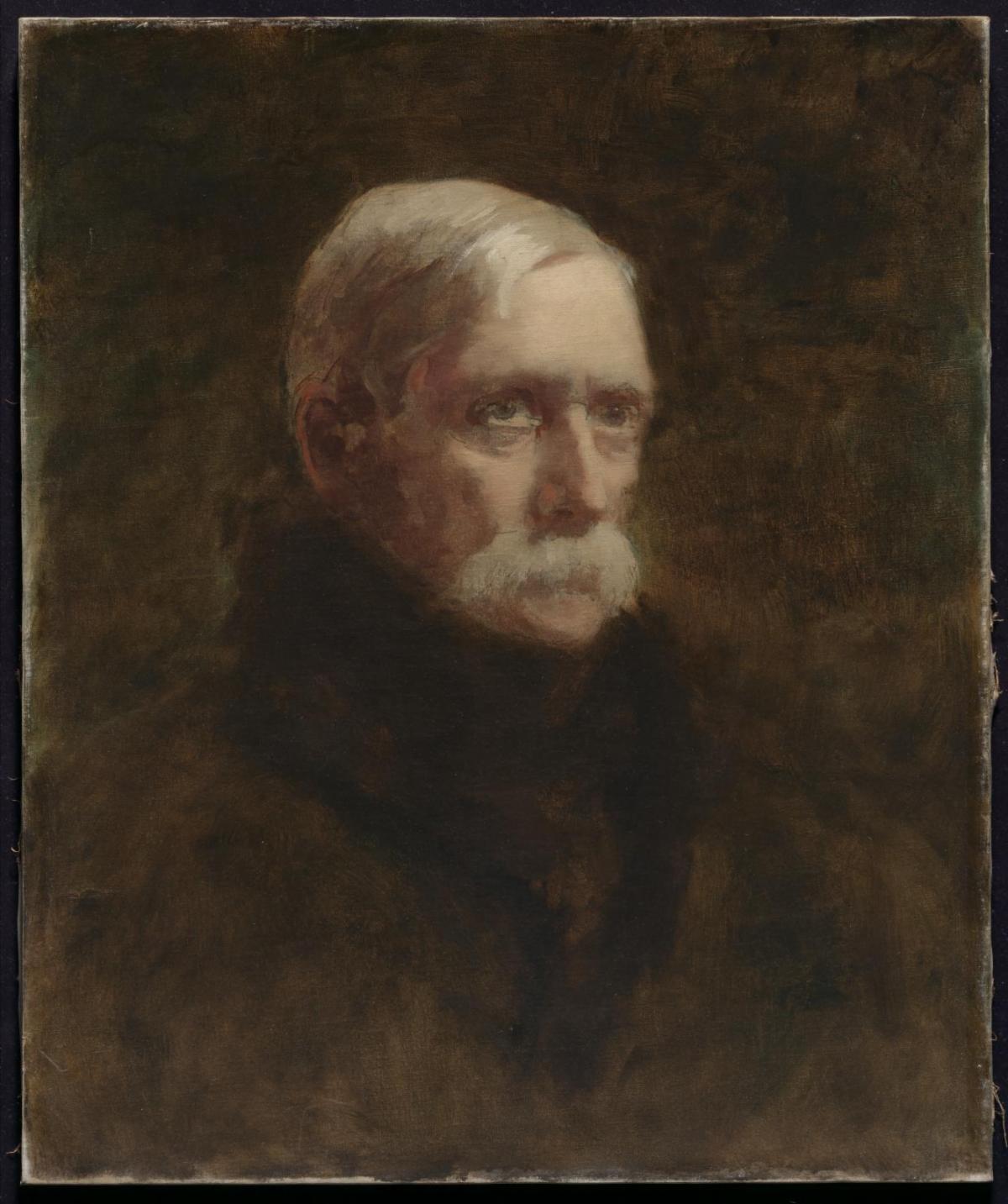 During this time Whitman painted a portrait of him. In 1887, he wrote, “I told you that I did not think I had any right to be painted. Now I feel a hundred-fold that I have no right to be painted as well as this. The picture tells the story of what I should like to be. It is simple and great and strong and humbles me as I look at it.” She would paint her friend more than once and even depict him in glass.
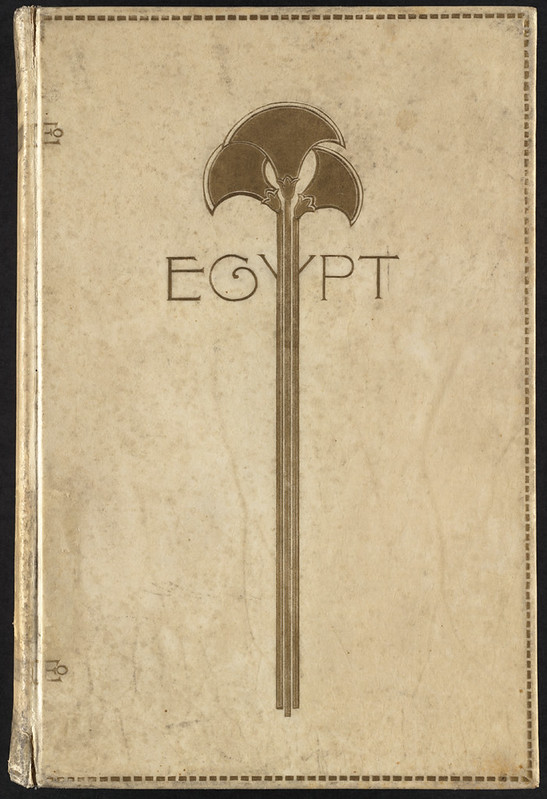 In 1891, he published a book with three essays on Egypt. Whitman designed the cover. In the preface Brimmer notes, “These essays were written during a recent journey in Egypt, with the constant assistance and able cooperation of my niece and fellow-traveller, Mrs. John Jay Chapman. They are indeed not less her work than mine. They were begun for the purpose of putting in order for our own instruction the results of our observation and of the best accessible knowledge of the whole subject. They are published in the hope that they may be useful as an introduction to works of higher authority.”
In 1893, as Brimmer returned home from a meeting of citizens on the death of Phillips Brooks, he slipped on icy pavement. He lay on the ground for hours before discovery. Although he seemed later to recover, friends and family say that he never truly regained his former strength.
On January 14, 1896, after a lingering illness, Brimmer died at his home in Boston. A memorial service was held at Trinity Church on January 26. Rector E. Winchester Donald delivered the sermon. He opened with an excerpt from psalm 18:35, Thy gentleness has made me great, and closed with the following words:
“Parishioners of Trinity Church, citizens of Boston, surely you have been thinking as you have listened, even as I was thinking while I wrote, of one who, to this Church and to this city, has displayed the greatness of his gentleness as have few men who have ever worshipped in this venerable parish and lived within this ancient town. With you I join in thanking God for the good example of that gentle spirit, that strong character, that noble unselfishness, that rare refinement, which, for three score and six years, shone undimmed in the life of God’s soldier, servant, saint, — Martin Brimmer.”
Until next month,
Cynthia
Sources and Further Reading
Andrews, Wayne. “Martin Brimmer: The First Gentlemen of Boston.” Archives of American Art Journal, vol. 30, no. 1/4, 1990, pp. 4–7. JSTOR, http://www.jstor.org/stable/1557634. Accessed 3 Mar. 2026.
Brimmer, Martin. Egypt: Three Essays on the history, religion and art of ancient Egypt. Houghton, Mifflin and Company, 1892. https://archive.org/details/egyptthreeessays00brim/page/n5/mode/2up
Brimmer Letters, 1880-1896. Archives of American Art.
https://www.aaa.si.edu/collections/martin-brimmer-letters-6829
Donald, E. Winchester. In Memory of Martin Brimmer: A Sermon Preached at Trinity Church. Printed by Request of the Wardens and Vestry, 1896.
https://archive.org/details/inmemorymartinb00donagoog/page/n4/mode/2up
Memoir of the Honorable Martin Brimmer
https://www.colonialsociety.org/node/234
Images
Egypt Cover Art
https://www.flickr.com/photos/boston_public_library/2350754114/in/album-72157604192955355
Paintings at the Boston Museum of Fine Arts
Martin Brimmer by Sarah Wyman Whitman
Harvesters Resting (Ruth and Boaz) by Jean-Francois Millet
The Questioner of the Sphinx by Elihu Vedder
The Love Song (Le Chant d’Amour) by Edward Burne-Jones
Other Notable Images
Mrs. Martin Brimmer
https://cdm.bostonathenaeum.org/digital/collection/p15482coll7/id/160